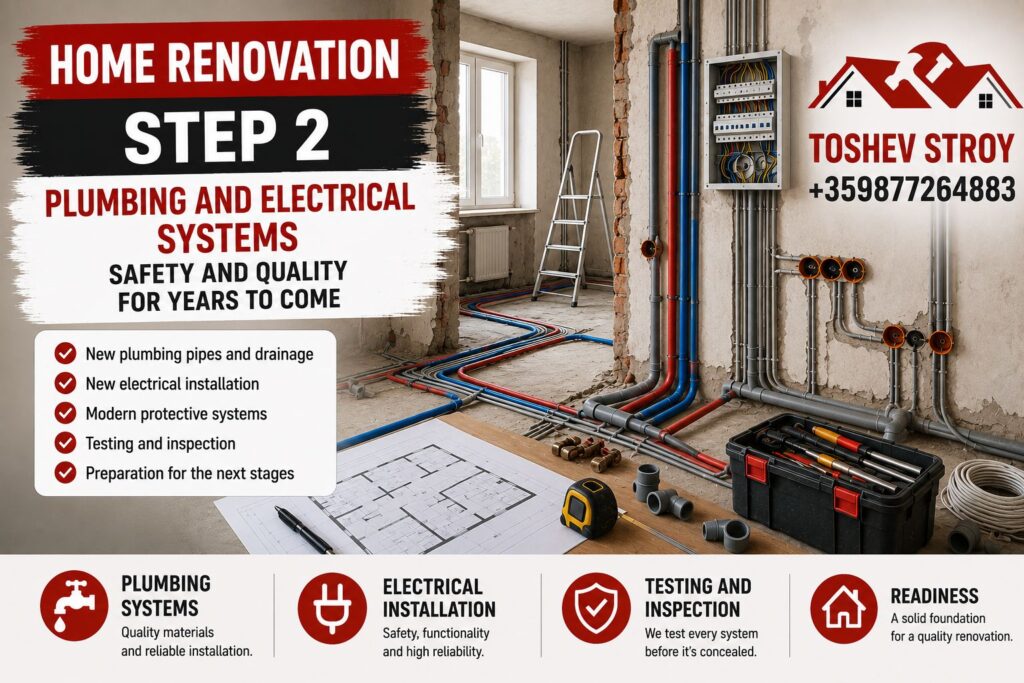
Home renovation – Step 2
Plumbing and electrical installation – The foundation of a safe renovation
Once the planning, demolition, and dismantling work has been completed, the next key stage of the renovation begins. This is when all work related to the replacement or installation of the plumbing and electrical systems is carried out. This is the correct sequence for a home renovation because these tasks require cutting into walls and floors. If they are postponed until a later stage, there is a risk of damaging already completed surfaces.
Before installation begins, it is important to determine the exact locations of electrical outlets, switches, lighting fixtures, sanitary equipment, and household appliances. This allows cable routes and plumbing lines to be installed according to the future layout of the property. As a result, costly modifications and unnecessary delays during the renovation can be avoided.
Electrical installation replacement
The electrical installation must meet both the household’s requirements and the current safety standards. In older properties, it is often necessary to replace the entire wiring system, the electrical distribution board, and the protective devices. This ensures greater system reliability and allows modern electrical appliances to be used safely.
Electrical installation work usually includes:
- Removal of the existing electrical installation when necessary.
- Installation of new cable routes.
- Installation of junction boxes.
- Preparation for electrical outlets and switches.
- Wiring for lighting circuits.
- Installation or replacement of the electrical distribution board.
- Inspection of the electrical installation before the wall chases are sealed.
What does the electrical installation inspection include?
Before the electrical installation is permanently concealed, it is necessary to verify that every component has been installed correctly and that each electrical circuit operates according to the project specifications. This inspection is essential for both safety and the reliable operation of the electrical system after the renovation has been completed.
The inspection usually includes:
- Verification of the correct positioning of electrical outlets and switches.
- Inspection of the cable routing.
- Verification of individual electrical circuit connections.
- Inspection of the junction box installation.
- Verification of the preparation for lighting fixtures.
- Inspection of the electrical distribution board and protective devices.
- Confirmation that the completed work matches the project specifications.
Plumbing system installation
Once the locations of the sanitary fixtures have been determined, plumbing work can begin. If the project includes relocating the kitchen, bathroom, or utility room, the new water supply and drainage lines are installed at this stage. After installation is completed, all connections must be tested for leaks before the walls and floors are permanently closed.
During a major renovation, both the water supply and drainage pipes are often replaced. The use of suitable materials and proper installation reduces the risk of leaks and improves the long-term reliability of the system. Once all tests have been successfully completed, the following finishing stages of the renovation can begin.
What does plumbing work include?
The scope of plumbing work depends on the condition of the existing installation and the planned changes within the project. During a complete home renovation, all required preparatory plumbing work is generally completed before the finishing stage begins.
The most common plumbing activities include in home renovation – Step 2:
- Removal of existing water supply pipes when necessary.
- Installation of new hot and cold water pipes.
- Installation of new drainage connections.
- Preparation for faucets and sanitary fixtures.
- Preparation for a washing machine and dishwasher.
- Leak testing and system performance verification.
- Preparation for the final installation of sanitary fixtures.
Why is the inspection of the installations mandatory?
Once the electrical and plumbing work has been completed, every installation must be thoroughly inspected before the wall chases are filled and the wall surfaces are finished. At this stage, any discrepancies can still be corrected without reopening completed walls or damaging finished surfaces. The inspection confirms that all cable routes, pipe connections, and installation points have been completed according to the project specifications.
After all inspections have been successfully completed, construction work can continue to the next stage. This minimizes the risk of future work on concealed installations and provides a reliable foundation for screeding, plastering, skim coating, and all remaining finishing work.
Why is it important to complete all changes before the finishing work?
After plastering, skim coating, and painting have been completed, access to the electrical cable routes becomes significantly more difficult. Any subsequent modification may require breaking into finished walls, repairing surfaces, and repainting. For this reason, all decisions regarding the location of electrical outlets, switches, and other electrical points should be finalized before this stage is completed.
Proper planning also ensures that future furniture and household appliances are positioned according to the planned locations of electrical outlets, switches, and lighting fixtures. This improves the functionality of the home and reduces the need for additional alterations after the renovation has been completed.
Home renovation – Step 2, conclusion
Replacing the plumbing and electrical installation is one of the most important stages of a complete home renovation. When all cable routes and plumbing lines are properly installed, inspected, and coordinated with the future layout of the property, the remaining construction work can proceed without unnecessary interruptions or additional expenses.
In Step 3, we will examine the next stage of the renovation – floor screeds, plastering, and drywalls installation, and explain why these activities create the foundation for high-quality finishing work.
Follow us on Facebook.