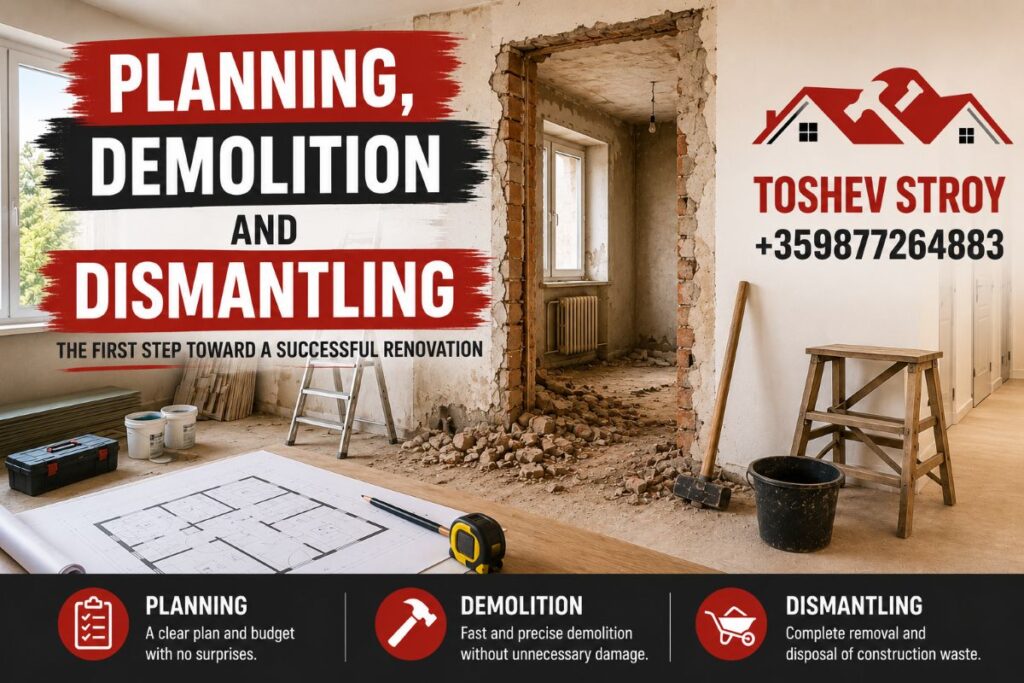
Planning demolition and dismantling, the beginning of the renovation
Planning demolition and dismantling mark the beginning of every renovation project. Before upgrading a home, it is important to understand the correct order of apartment renovation. Good planning reduces the risk of repeating completed work, protects materials from damage, and helps different trades work more efficiently. When each stage follows a logical sequence, the renovation progresses more smoothly and unnecessary expenses caused by poor planning are avoided.
The correct order is not simply a matter of convenience but a technical necessity. Certain construction and installation tasks must be completed before others can begin. For example, electrical and plumbing installations are replaced before plastering and painting because they require cutting into walls and floors. If this sequence is ignored, finished surfaces may be damaged, leading to additional repair work.
What does a complete apartment renovation include?
A full apartment renovation usually covers all construction and finishing work required to modernize the property. Depending on the condition of the home, some stages may not be necessary, but the execution sequence remains the same. Every step relies on the proper completion of the previous one, which is essential for achieving a durable and high-quality result.
The most common renovation activities include:
- Site inspection and renovation planning.
- Demolition and removal of existing finishes.
- Electrical system replacement.
- Plumbing replacement or repair.
- Construction of new partition walls when required.
- Floor screeding and repair plaster application.
- Drywall installation when included in the project.
- Skim coating and preparation of walls and ceilings.
- Flooring installation.
- Interior door installation.
- Painting.
- Installation of sanitary fixtures, lighting, and furnishings.
What are the benefits of a well-planned renovation?
When every stage is organized in advance, coordination between different contractors becomes much easier. This reduces downtime between tasks and allows materials to be delivered at the right time. It also minimizes the risk of completed finishing work being damaged by subsequent construction activities.
Good preparation also helps allocate the renovation budget more accurately. When the work sequence is clearly defined, it is easier to estimate labor, material, and transportation costs. This allows the renovation to be completed step by step without compromising quality or causing unnecessary interruptions.
Planning, demolition and dismantling
Why is preparation the first and most important step?
Every successful renovation begins with careful planning. Before construction work starts, it is essential to determine what changes will be made, which rooms will be renovated, and whether electrical systems, plumbing, flooring, or partition walls need to be replaced. This stage makes it possible to prepare a realistic budget, create a work schedule, and select suitable materials before construction begins.
Preparation also includes inspecting the condition of the building structure, walls, floors, and ceilings. In older properties, it is recommended to assess the condition of the electrical and plumbing systems, as these often require replacement. Identifying potential issues early helps prevent unexpected expenses and makes the following stages of the renovation much easier.
What should be planned in advance?
Proper organization reduces the risk of delays and allows the renovation to progress in a logical sequence. Defining every stage beforehand helps avoid last-minute changes that often increase costs and extend the project timeline.
Before starting the renovation, it is recommended to determine:
- The scope of all renovation work.
- The order of execution.
- Required construction materials.
- Budget for labor and materials.
- Schedule for each stage.
- Material delivery and storage arrangements.
- Construction waste removal.
Demolition and dismantling
Once the preparation stage is complete, demolition work begins. This includes removing old flooring, wall coverings, sanitary fixtures, doors, windows, furniture, and other elements that will not be reused. All work should be carried out carefully to avoid damaging structural components of the building or installations that will remain in service.
Where necessary, non-load-bearing partition walls are also removed, provided this is included in the project and complies with applicable building regulations. After demolition is complete, all construction waste is cleared from the premises. This creates a safe and efficient working environment for the next stages of the renovation.
What does demolition usually include?
The scope of demolition work depends on the condition of the property and the planned renovation. During a complete renovation, this stage typically includes the removal of all old finishes and components that will be replaced.
The most common demolition activities include:
- Removal of existing flooring.
- Removal of ceramic wall and floor tiles.
- Removal of old plaster where necessary.
- Removal of sanitary fixtures.
- Removal of interior doors.
- Removal of old cabinets and built-in furniture.
- Removal of non-load-bearing partition walls when required by the project.
- Collection and disposal of construction waste.
Why should quality demolition never be overlooked?
Carefully executed demolition creates the proper foundation for every construction and finishing task that follows. Remaining sections of old finishes, adhesive residues, or unstable plaster can interfere with the installation of new materials and affect the overall quality of the finished renovation.
When the property has been properly cleaned and prepared, installing new utilities, floor screeds, and finishing materials becomes much easier. This improves workmanship and significantly reduces the likelihood of additional corrections during the renovation.
Planning, demolition and dismantling, the beginning of every renovation – conclusion
Proper planning, demolition, and dismantling form the foundation of every successful interior renovation. During this initial stage, the conditions are created for safe, efficient, and well-organized construction work. Once old finishes have been removed, the property has been prepared, and the project has been carefully organized, the risk of delays, additional expenses, and repeating completed work is significantly reduced.
In the next part, we will explain why replacing the plumbing and electrical systems is carried out immediately after demolition, what this stage involves, and how proper execution provides a reliable foundation for all finishing work throughout the property.
We at Toshev Stroy provide professional apartment renovation services. Request a free site inspection, and we will prepare a detailed quotation for your project.
Follow us on Facebook.